

Since mid-2024, avian influenza coverage in Australian agriculture has focused almost entirely on the birds: culling, movement restrictions, shed disinfection and PPE. Rarely mentioned is what happens to the water, soil and sediment on affected properties – or ones that might be next.
H5N1 clade 2.3.4.4b reached Australian wild seabirds in June 2026, and Australia recorded its first human case in 2024. Public health authorities still rate the risk to the general public as low, but Australia’s One Health surveillance approach recognises that disease doesn’t stop at the shed door – and neither should your response.
West Soil & Water is a Perth-based environmental consultancy. Far from veterinarians – we test soil and water across WA farms and agribusinesses, increasingly seeing avian flu as an environmental issue as much as an animal health one. Below is a practical checklist to run alongside your biosecurity plan, with a clear emphasis on when to test your water supply.
How Bird Flu Moves Through Water, Soil and Wild Birds
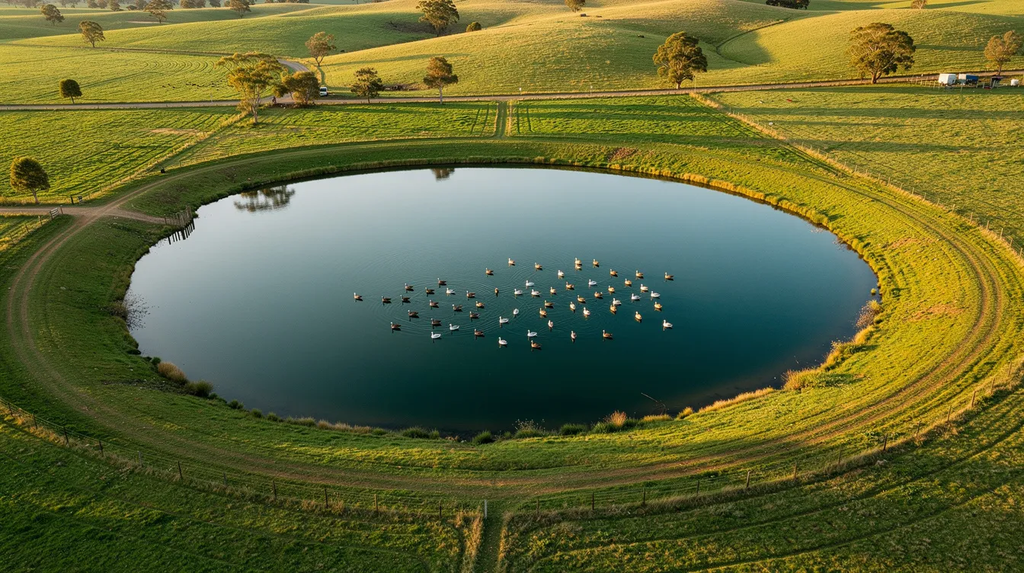
H5N1 spreads through faeces, especially in water, and it can survive there for weeks – laboratory studies show it persisting at least 24 days at 17°C, and longer in mud and wet sediment where UV and drying are limited. Cool, shaded dams with organic build-up are common across southern WA and are ideal for virus persistence. A single dead bird near a dam can contaminate the water source downstream.
Wild birds and infected ducks can carry the virus vast distances during migration. Even after an outbreak appears to be over and the infected poultry destroyed, wild species can re-seed a property through environmental contamination. This is why ongoing water and soil monitoring is important.
On a typical property, the pathways are usually:
- Wild birds landing on surface dams, troughs and irrigation storages
- Faeces washing into drains, tanks and shallow bores during rain events
- Runoff from sheds or compost pads carrying contaminated material downslope
- Shared bores supplying multiple sheds, livestock water and sometimes the homestead
Why Water Testing Matters
Most outbreak protocols test birds that are both dead and alive, cull infected flocks, and disinfect sheds – but rarely sample water, drains, paddocks or burial sites. But this is a huge recontamination risk if your water supply stays untreated after the sheds are cleaned.
WA farms carry specific risks: surface dams shared across sheds or mixed livestock, shallow bores in sandy coastal soils that move water quickly, seasonal flooding that carries runoff, and mixed operations where one water source serves poultry, cattle, sheep and goats.
Workers face low but real exposure through aerosols, wash-down splashes and dust from dried contaminated soil. Report suspicious poultry mortality to the Emergency Animal Disease Hotline on 1800 675 888. Human H5N1 infections remain rare, mostly mild, and tied to close animal contact – but none of that changes the practical need: environmental testing gives you evidence for real decisions, like when a dam or bore is safe to reuse.
Regulatory Considerations for WA Producers
Bird flu contamination intersects with WA’s contaminated sites, water resource and waste management rules. Polluted dams or bores, or contamination migrating off-site, can trigger reporting obligations under the Contaminated Sites Act 2003 and potential clean-up notices – a memorial on a land title is a real, lasting hit to property value.
The same process used for industrial contaminated sites – desktop review, inspection, targeted sampling, risk assessment, remediation planning – applies equally here. Early engagement with environmental specialists demonstrates due diligence, particularly for larger poultry, egg and integrated livestock operations. Most issues are manageable if caught early; the goal is to find them before a regulator or buyer does.
Where West Soil & Water Fits In
We work alongside vets and government agencies, focusing on the water your birds drink, the soil your sheds stand on, and the groundwater beneath your disposal sites:
- Before an outbreak: baseline water and soil testing, pre-selecting disposal sites, mapping risk zones
- During a response: rapid water sampling, advising on burial or compost siting, coordinating with vets and agencies
- After the all-clear: designing monitoring programs, interpreting results, preparing compliance documentation
- During property transactions: environmental due diligence for buyers, sellers and financiers
If you manage poultry, eggs or mixed livestock in WA, review your biosecurity plan this month and add a short environmental checklist for water, soil and waste. Nothing complex, just get a bit of an action plan together. Your birds get tested and your sheds get cleaned; make sure your water and soil get the same attention.
Concerned about contamination on your site? Speak with an expert environmental consultant today.