Monday - Friday 8 am - 5 pm

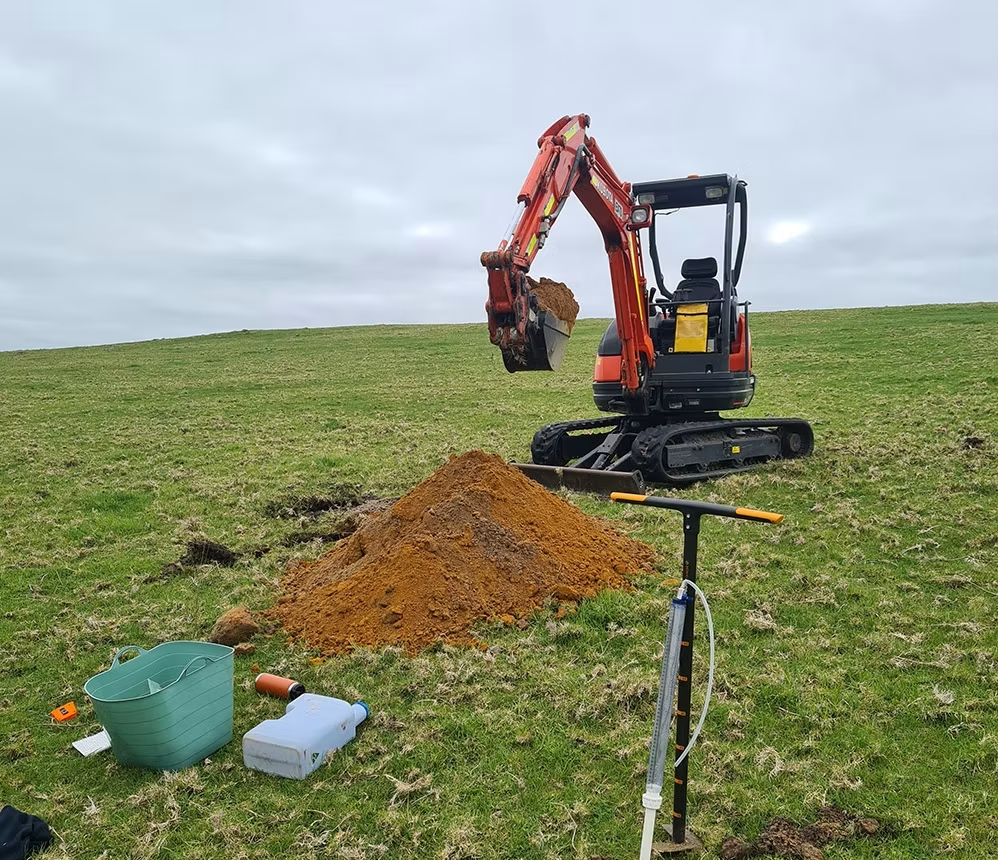
A Preliminary Site Investigation (PSI) is the first formal step in proper land management. It identifies whether a site could be contaminated and offers recommendations on further testing for land and soil.
West Soil & Water conducts these investigations in line with both the Contaminated Sites Act 2003 and NEPM guidelines, ensuring that you benefit from a compliance-focused overview of site risks. We can also conduct further due diligence investigations for contaminated land and remediation works.
In this article, we outline the benefits of a PSI report and why it is such a critical tool in the compliance process. For more information, please contact our team.
Also known as a Phase I Environmental Site Assessment, a PSI is designed not to confirm contamination, but to evaluate the likelihood of its presence. Using desktop evidence, it:
Establishes a baseline understanding of site conditions
Highlights historical or current activities that may have led to contamination
Determines whether a Detailed Site Investigation (DSI) is required
Provide regulators and stakeholders with an informed initial risk profile
Your report will open with a clear description of the site’s location, boundaries and topography, as well as some extra information about surrounding land uses. This broader context helps identify potential contamination from neighbouring properties, whether they be industrial or agricultural.
One of the most important aspects of a PSI is the desktop study of historical records. This often includes:
Previous ownership and tenancy records
Historical aerial photographs and Landgate records
Local government planning files
Archives indicating past industrial or agricultural activities
This review is important because is establishes patterns of land use and points investigators in the direction of likely contamination risks. For example, a former workshop will have different risks to a site that held chemical storage before being converted into a landfill operation.
Your PSI report will also include a search of the DWER Contaminated Sites Database and other relevant records to determine whether the site (or a nearby property) has been previously reported or classified as contaminated and if any remediation orders have been issued.
A desktop study only reveals some of the picture, so we conduct a physical inspection to make direct observations that support or challenge our findings. Most consultants will look for:
Discoloured soil or distressed vegetation
Unusual odours or staining
Evidence of waste disposal, asbestos fragments etc.
Surface water issues
Think of this as a “reality check”, ensuring that the risks identified on paper are actually present in the field.
Findings are combined to outline possible contaminants such as hydrocarbons, heavy metals, solvents, asbestos and pesticides. Importantly, they are only suspected risks at this stage (further testing in a DSI will confirm their (non)presence).
Your report may include a CSM to map out potential sources, pathways and receptors of contamination, helping stakeholders visualise risks.
The final section of your PSI will be the recommendations. Depending on the findings of the report, these could include:
Proceeding with a DSI for contaminated land and soil testing
Implementing immediate risk management measures if obvious hazards are found
No further action if the risk of contamination is deemed low
For both buyers and developers, a PSI offers clarity before a financial commitment is made. Testing soil for asbestos, petroleum and other contamination will uncover liabilities that impact property value, affect redevelopment plans and decrease negotiation power.
From a regulatory perspective, conducting a PSI also works toward your reporting obligations and reduces the risk of non-compliance penalties.
At West Soil and Water, our PSI reports and designed to go above and beyond regulatory minimums whilst still being easily understood. Our team construct a clear picture of potential contamination and provide recommendations that are both practical and proportionate helping you decide whether further testing is necessary and how to plan for the possibility of remediation.
A Preliminary Site Investigation is the first step in compliant, proactive contaminated land management. At West Soil & Water, we review site history, conduct inspections and identify potential contamination to provide you a foundation for informed decision making and compliance with Western Australian regulations.
If you need a PSI for due diligence, redevelopment or compliance purposes, contact us today to discuss your site.
