Monday - Friday 8 am - 5 pm

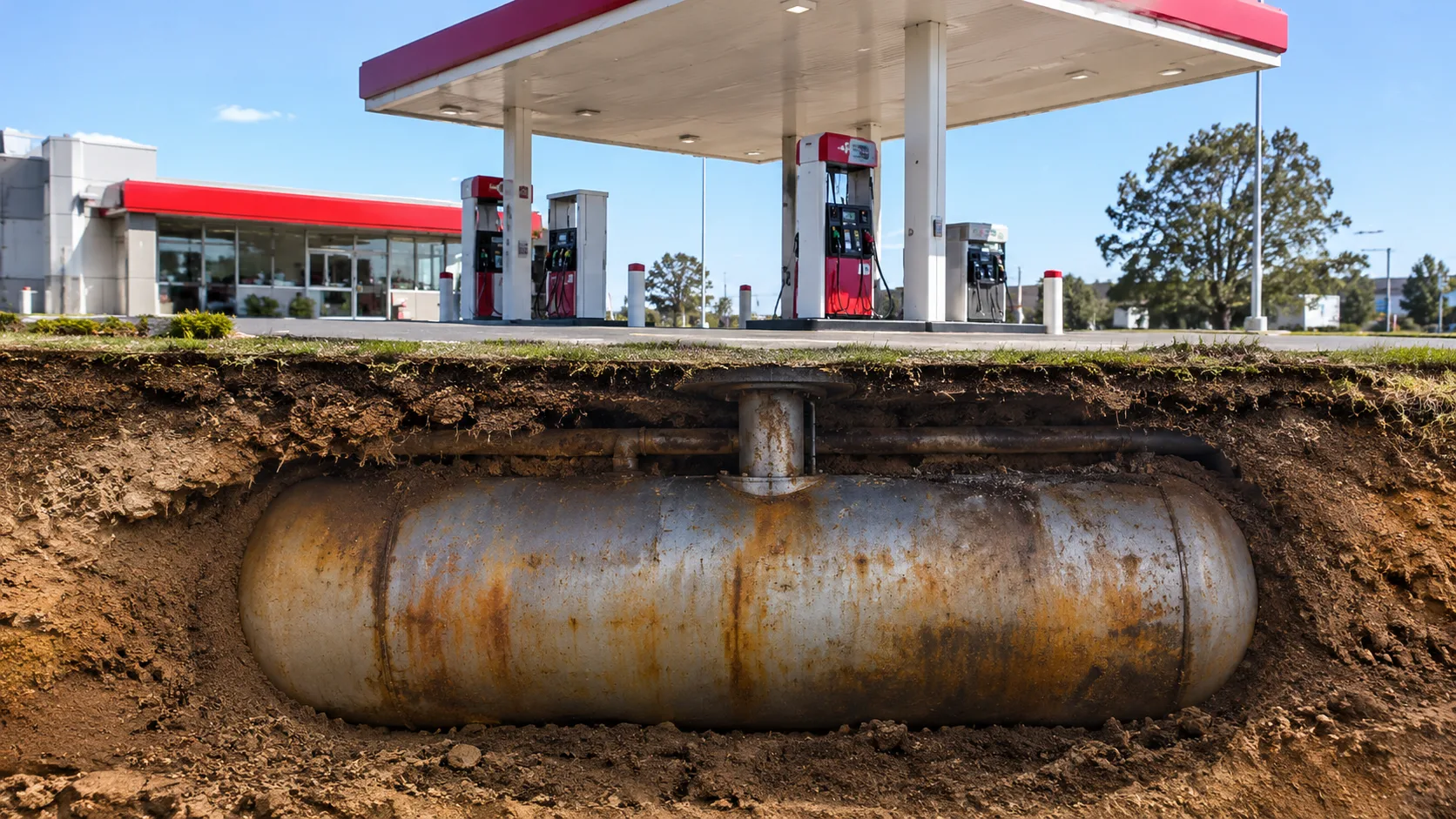
If you own property or are developing in Perth or regional Western Australia, there could be a serious environmental risk sitting just metres beneath your feet.
Old underground fuel tanks (sometimes installed decades ago and long forgotten) can leak petroleum into surrounding soil and groundwater without any visible warning. Left undetected, these tanks become costly liabilities that affect property values, delay development and trigger regulatory action.
West Soil & Water helps Perth property owners identify, assess and manage these hidden contamination risks before they escalate.
Click here to request a soil and groundwater contamination assessment around a septic or fuel tank.
Underground fuel tanks (also called underground petroleum storage tanks or USTs) are buried vessels used to store petrol, diesel, heating oil and other hydrocarbons. They were widely installed across Western Australia from the mid-twentieth century, particularly at service stations, bulk fuel depots, industrial estates and rural properties without access to reticulated fuel services.
Many of these tanks were single-walled steel construction with minimal corrosion protection. Today, most pre-1990s installations are increasingly prone to deterioration.
In many cases, tanks have been decommissioned but remain in the ground, sometimes without any record of their existence. This poses a serious contamination risk for property owners, developers and inhabitants alike.
Underground fuel tanks deteriorate as their steel walls corrode, joints and seals fail, and general wear and tear takes hold. Changes in surrounding soil and settlement also play a part.
In older tanks without cathodic protection or secondary containment, this creates leaks that can go undetected for many years, causing:
When tanks leak, hydrocarbons migrate into the surrounding soil. Perth’s notoriously sandy soils allow for the rapid vertical migration of these contaminants and where clay layers are present, movement may be slowed or diverted, but contamination still accumulates.
Once hydrocarbons reach the water table, they spread laterally, forming plumes that affect groundwater quality across a wide area. Certain compounds (like benzene) are highly soluble and toxic even at low concentrations.
Many Perth properties are located within or near Public Drinking Water Source Areas (PDWSAs) or Underground Water Pollution Control Areas, where groundwater sources supply drinking water and irrigation. Here, contaminated groundwater poses serious public health risks, including exposure through bore water and vapour intrusion into buildings.
BTEX compounds (benzene in particular) are recognised carcinogens. Their spread through fuel contamination can affect water quality in nearby bores and waterways, damage vegetation, harm aquatic ecosystems and create long-term exposure risks for residents.
This creates a long lasting risk. Many hydrocarbons can persist in soil for decades and other compounds can migrate as vapour into occupied buildings.
The financial and regulatory consequences of underground fuel or septic tank contamination are significant.
Most commercial property owners are unaware of buried tanks until contamination is detected. However, you can look to these indicators to spot their presence before making major development decisions:
If any of these signs are present, professional assessment should not be delayed. Get in touch to arrange an investigation.
At West Soil & Water, our consultants follow a structured approach to investigating potential underground fuel tank contamination:
We review historical records, aerial imagery, planning schemes, land titles and water protection area maps to identify likely past fuel storage or industrial use. This scoping stage informs where and how to sample.
A physical walkover identifies surface features such as fill points, vent pipes, old concrete pads, soil discolouration and odours. We assess the site layout and geological context to target high-risk areas for sampling.
Soil cores are collected at various depths and locations across the site. Samples are analysed by NATA-accredited laboratories for TPH fractions, BTEX compounds, lead (where leaded petrol may have been stored), and other relevant contaminants. Groundwater sampling is conducted where depth and geology indicate risk.
Results are assessed against WA contaminated sites guidelines and ASC NEPM criteria. Our reports identify the extent of contamination, migration pathways and exposure risks, and provide clear remediation recommendations, whether it be excavation, in situ treatment, containment or ongoing monitoring.
Underground fuel tanks are not the only buried system that can silently contaminate soil and groundwater. Across WA, septic systems present a parallel risk that many property owners overlook.
Septic tank systems consist of one or two watertight tanks that separate solid waste from liquid waste, treating the wastewater using natural bacterial processes. When installed correctly and properly maintained, a well-designed concrete septic tank can last 40–100 years.
However, poorly maintained septic systems can leak untreated wastewater into surrounding soil and groundwater without obvious surface signs. This can see groundwater contaminated with pathogens, nutrients and other pollutants, presenting a serious public health and environmental risk.
Similar to USTs, our team provides septic tank soil testing and Site and Soil Evaluations (SSE) for property owners and managers across the Perth metro area and regional Western Australia. Whether you need an SSE before installing a new septic system, or you’re investigating potential contamination following the removal of an old tank, our assessments identify risks to soil and groundwater to ensure regulatory compliance.
If you suspect your property may have a buried fuel tank, a failing septic system or any form of subsurface contamination, take action early:
Early investigation is consistently the most cost-effective approach. Issues identified before a transaction or development application avoid the delays, disputes and inflated costs that come with late discovery.
Underground fuel tanks and failing septic systems share one critical characteristic: they can contaminate soil and groundwater for years without any visible warning.
For property owners across Perth and Western Australia, proactive environmental assessment is the most effective way to protect your investment, avoid regulatory liability and safeguard the health of your tenants and community.
West Soil & Water has the expertise, local knowledge and laboratory partnerships to identify hidden contamination risks and guide you through assessment, compliance, and remediation.
Contact West Soil & Water today to arrange a site assessment.
Costs depend on the size and complexity of the site, the number of samples required and whether groundwater monitoring is needed. An assessment typically includes a desktop review, site inspection, soil sampling, NATA-accredited laboratory analysis and a detailed report with risk assessment and remediation recommendations.
Contact our office for a site-specific quote.
Most site assessments are finalised in less than three weeks, including laboratory turnaround. Complex sites with extensive groundwater monitoring may require additional time.
If contaminants exceed WA guideline levels, a remediation plan is developed. Options may include soil excavation, in situ treatment, containment or monitored natural attenuation. West Soil & Water provides reporting that satisfies regulatory requirements and supports development or transaction approvals.
Standard soil and groundwater investigations generally do not require specific permits, though work within water protection areas or involving bore installation may require approvals. West Soil & Water advises on any regulatory requirements applicable to your site.
Yes. We provide remediation planning, site management plans, validation sampling and ongoing monitoring to ensure contaminated sites meet WA regulatory standards and achieve closure.
