Monday - Friday 8 am - 5 pm

How Much Does an Environmental Consultant Cost in WA?

Environmental consultants’ cost in WA depends on the scope of work, the size and history of the land, how much laboratory testing is needed, project complexity and what the regulator requires at the end. Two jobs with the same name can cost very different amounts.

This guide explains what an environmental consultant does, how consultants price their work, what pushes a quote up and what to give a consultant so your quote is accurate the first time.

Click here to request a quote from our team.

What does an environmental consultant actually do?

An environmental consultant investigates whether land, soil or water carries environmental risk, tells you what that means for your project and documents it in a way regulators, lenders and buyers accept. For contaminated land work in WA, that usually covers:

  • Desktop assessments: reviewing previous land uses, aerial imagery and mapping before fieldwork starts.
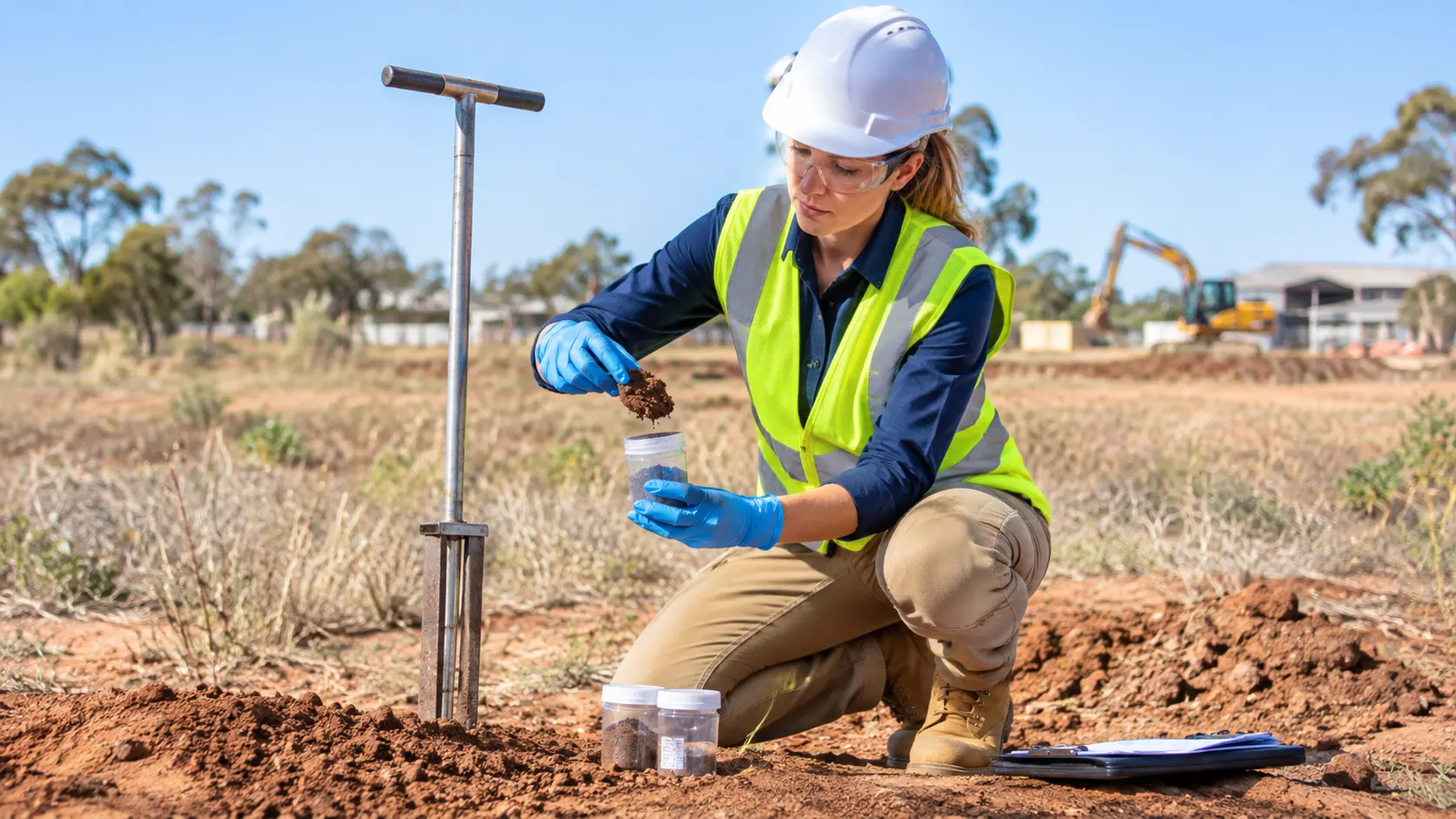
  • Site investigations: testing soil, groundwater and surface water to confirm whether contamination is present and how far it extends.
  • Laboratory analysis: sending samples to NATA-accredited laboratories and interpreting the results against state and federal guidelines.
  • Management plans: setting out how risks such as acid sulfate soils or asbestos will be handled during construction, so the project stays in compliance.
  • Remediation and validation: treating or removing contamination, then proving the land meets the required criteria.
  • Monitoring: ongoing soil and water testing during or after works, with reporting to the Department of Water and Environmental Regulation (DWER).


The consultant’s job is to give you a defensible answer. That answer decides if a purchase settles, a development approval progresses or the land can be reused.

How environmental consultants price their work

Most quotes combine professional time with third-party costs. Knowing the parts makes quotes easier to compare.

Professional fees

Consultants charge for the time and expertise spent on planning, fieldwork, data interpretation and reporting. This is usually quoted as either:

  • A fixed fee (lump sum): one price for a defined scope. You know the total up front, but anything outside the scope becomes a variation.
  • Hourly or daily rates: you pay for the time used. This suits advisory tasks and jobs where the scope can’t be defined until early results come in.


Larger projects are often staged, with a fixed fee for the first stage and later stages priced once results show what’s needed.

Disbursements

Disbursements are the costs a consultant passes through from other providers:

  • Laboratory analysis, often the largest single item on a sampling job.
  • Drilling or excavation contractors for boreholes, test pits and groundwater monitoring bores.
  • Equipment hire, consumables and sample transport.
  • Travel and accommodation for regional sites.


A good quote lists these separately, so you can see what you’re paying for and what happens if the scope changes.

How environmental consultant cost varies by job type

The type of job drives cost more than anything else.

For example, a desktop assessment or preliminary site investigation reviews existing information and tends to cost less than fieldwork. Once drilling and laboratory analysis are involved, the cost rises.

In turn, detailed investigations cost more than preliminary ones. That’s driven by testing more locations at deeper levels and for more contaminants.

Management plans sit in the middle. An acid sulfate soil management plan or asbestos management plan builds on investigation results already gathered. If no testing has been done, that comes first.

Remediation and validation are usually the largest jobs. They involve contractors, treatment or disposal, and validation testing to prove the land is clean.

Monitoring is a recurring cost. Groundwater or acid sulfate soil monitoring continues for the life of the works, so total cost depends on how long monitoring is required.

How cost varies by client and industry

Who you are and why you need a consultant also shapes the scope.

Property buyers carrying out due diligence usually need a fast, focused investigation that answers one question before settlement: is there a liability on this land?

Developers and construction firms often need several stages across a project: investigation, management plans, monitoring during construction and close-out reporting for approval conditions.

Commercial and industrial sites such as former service stations, workshops or manufacturing sites usually need more testing, because fuels, solvents and heavy metals each require separate analysis.

Private landowners with smaller properties often need a single, well-defined scope, such as a septic system assessment or a check before sale.

Factors that make a job cost more

Within any job type, these factors increase the price:

  • Size and number of samples: more area or more soil layers means more test locations and more laboratory analysis.
  • Land use history: industrial or unknown past uses need a wider range of analysis than land that has only ever been residential.
  • Groundwater: installing monitoring bores adds drilling, equipment and analysis costs.
  • Depth of investigation: deeper excavation or dewatering on the project means deeper testing.
  • Access and location: restricted access, ongoing work onsite and regional or remote locations add time and travel.
  • Urgency: compressed timelines for settlement or approval deadlines may need expedited laboratory turnaround and rescheduled field crews, both of which cost.
  • Regulatory requirements: reports that will be reviewed by DWER or a contaminated sites auditor need more detail to meet compliance standards.
  • Findings: if an investigation finds contamination, further investigation, management or remediation may follow. This is the biggest source of cost change on most projects.

The cheapest quote isn’t always the best value

When the scope isn’t clearly defined, consultants can interpret the required depth of investigation differently and quotes can vary widely.

A low quote may be based on fewer samples or a narrower range of analysis. If that doesn’t satisfy the regulator or your lender, you pay for a second round of fieldwork and lose time and money.

Before you commit, compare quotes on what they include: sample numbers, analytes, reporting standard and exclusions.

How to get an accurate quote

The more a consultant knows at the start, the less the price changes later. Before you request a quote, gather:

  • Property details: address, lot number, site plan and current use.
  • The reason for the job: purchase due diligence, a development approval condition, a DWER requirement, a sale or a lender request. If there is a planning condition or letter from a regulator, send it.
  • Proposed works: footprint, excavation depths and volumes and whether dewatering is planned.
  • Previous reports: earlier investigations, geotechnical reports or monitoring data can reduce what needs to be done.
  • History: known past uses, fuel tanks, demolished buildings, fill or asbestos.
  • Access: who controls access, operating hours and any induction requirements.
  • Timeline: settlement, approval or construction dates the consultant must meet.


In return, expect the quote to set out the scope, the approach, the people involved and their expertise, a cost breakdown including disbursements, the timeline, assumptions and exclusions and how variations will be handled.

Choosing environmental consultants in Perth

Cost matters, but the right consultant also needs to understand WA conditions and regulatory settings. When comparing environmental consultants in Perth, look for:

  • Experience with soils, groundwater and compliance management under the Contaminated Sites Act.
  • Independence, so the advice reflects what the land needs.
  • Use of NATA-accredited laboratories.
  • Reports that meet DWER expectations without needing to be redone.


We’re a specialist, independent environmental consultancy
based in Western Australia with over 13 years of experience in contaminated site investigations, soil and water testing, acid sulfate soils and site assessments. Much of what we do is due diligence for developers, development consultants, construction firms and buyers who need clear answers before they commit to a property.

Get an accurate quote for your site

Fill out the form below and we’ll come back within 1 business day with a scoped quote.

Frequently asked questions

How much does it cost to hire an environmental consultant?
The cost of hiring an environmental consultant depends on the job type, project complexity, the amount of laboratory testing and the reporting standard required. For example, a desktop review costs far less than an investigation with drilling and groundwater bores, so an accurate figure needs your property details and the reason for the job.
A reasonable consulting fee is one that matches a clearly defined scope and is itemised, so you can see the professional time, laboratory analysis and other disbursements and know what triggers extra cost.
For most property and development projects, yes. Identifying contamination or acid sulfate soils before settlement or construction is cheaper than dealing with stop-work directions, remediation or a failed sale later.