Monday - Friday 8 am - 5 pm

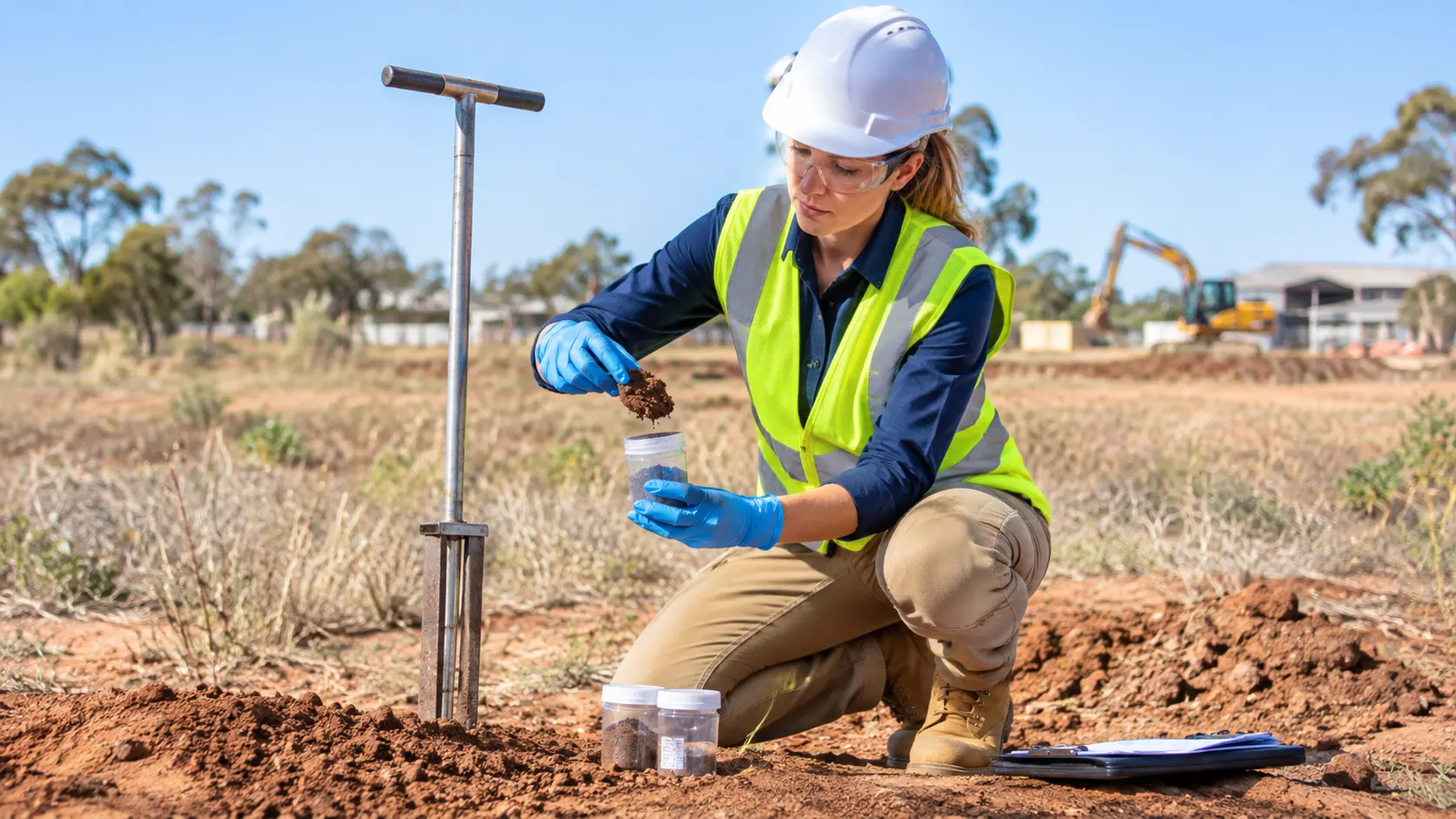
Environmental consultants’ cost in WA depends on the scope of work, the size and history of the land, how much laboratory testing is needed, project complexity and what the regulator requires at the end. Two jobs with the same name can cost very different amounts.
This guide explains what an environmental consultant does, how consultants price their work, what pushes a quote up and what to give a consultant so your quote is accurate the first time.
Click here to request a quote from our team.
An environmental consultant investigates whether land, soil or water carries environmental risk, tells you what that means for your project and documents it in a way regulators, lenders and buyers accept. For contaminated land work in WA, that usually covers:
The consultant’s job is to give you a defensible answer. That answer decides if a purchase settles, a development approval progresses or the land can be reused.
Most quotes combine professional time with third-party costs. Knowing the parts makes quotes easier to compare.
Consultants charge for the time and expertise spent on planning, fieldwork, data interpretation and reporting. This is usually quoted as either:
Larger projects are often staged, with a fixed fee for the first stage and later stages priced once results show what’s needed.
Disbursements are the costs a consultant passes through from other providers:
A good quote lists these separately, so you can see what you’re paying for and what happens if the scope changes.
The type of job drives cost more than anything else.
For example, a desktop assessment or preliminary site investigation reviews existing information and tends to cost less than fieldwork. Once drilling and laboratory analysis are involved, the cost rises.
In turn, detailed investigations cost more than preliminary ones. That’s driven by testing more locations at deeper levels and for more contaminants.
Management plans sit in the middle. An acid sulfate soil management plan or asbestos management plan builds on investigation results already gathered. If no testing has been done, that comes first.
Remediation and validation are usually the largest jobs. They involve contractors, treatment or disposal, and validation testing to prove the land is clean.
Monitoring is a recurring cost. Groundwater or acid sulfate soil monitoring continues for the life of the works, so total cost depends on how long monitoring is required.
Who you are and why you need a consultant also shapes the scope.
Property buyers carrying out due diligence usually need a fast, focused investigation that answers one question before settlement: is there a liability on this land?
Developers and construction firms often need several stages across a project: investigation, management plans, monitoring during construction and close-out reporting for approval conditions.
Commercial and industrial sites such as former service stations, workshops or manufacturing sites usually need more testing, because fuels, solvents and heavy metals each require separate analysis.
Private landowners with smaller properties often need a single, well-defined scope, such as a septic system assessment or a check before sale.
Within any job type, these factors increase the price:
When the scope isn’t clearly defined, consultants can interpret the required depth of investigation differently and quotes can vary widely.
A low quote may be based on fewer samples or a narrower range of analysis. If that doesn’t satisfy the regulator or your lender, you pay for a second round of fieldwork and lose time and money.
Before you commit, compare quotes on what they include: sample numbers, analytes, reporting standard and exclusions.
The more a consultant knows at the start, the less the price changes later. Before you request a quote, gather:
In return, expect the quote to set out the scope, the approach, the people involved and their expertise, a cost breakdown including disbursements, the timeline, assumptions and exclusions and how variations will be handled.
Cost matters, but the right consultant also needs to understand WA conditions and regulatory settings. When comparing environmental consultants in Perth, look for:
We’re a specialist, independent environmental consultancy based in Western Australia with over 13 years of experience in contaminated site investigations, soil and water testing, acid sulfate soils and site assessments. Much of what we do is due diligence for developers, development consultants, construction firms and buyers who need clear answers before they commit to a property.
Fill out the form below and we’ll come back within 1 business day with a scoped quote.
